

Table of Contents
- Why Pet Owners Look for Thule Alternatives
- Best Dog Bike Trailers for Large Dogs: Size and Capacity Comparison
- Dog Bike Trailer Safety Features That Matter
- How to Choose a Bike Trailer for Your Dog: Selection Criteria
- Multi-Use Functionality: Stroller, Jogger, and Trailer in One
- Long-Term Durability and Maintenance
- Pricing Breakdown and Value Comparison
- Frequently Asked Questions
Last Updated: September 25, 2026
Why Pet Owners Look for Thule Alternatives
Pet owners searching for a thule alternative for pet trailers often hit a wall: premium pricing without proportional benefits. Newer competitors now deliver comparable features at lower price points, making alternatives both practical and smart.
A thule alternative for pet trailers means finding a solution tailored to your dog's size, your riding style, and your financial reality. Booyah Strollers offers high-quality trailers for dogs from 40 to 110 pounds with suspension systems that rival premium brands at significantly lower prices.

Best Dog Bike Trailers for Large Dogs: Size and Capacity Comparison
The best dog bike trailers for large dogs prioritize interior dimensions over weight ratings. A trailer rated for 110 pounds means nothing if your dog can't sit upright comfortably. The real metric is usable interior space combined with a low center of gravity that prevents tipping.
Large dogs need trailers with interior dimensions of at least 32 inches long by 24 inches wide by 21 inches high. Booyah Extra Large models offer 36 x 24 x 22 inches, allowing most large breeds to sit upright with their head visible through the window.
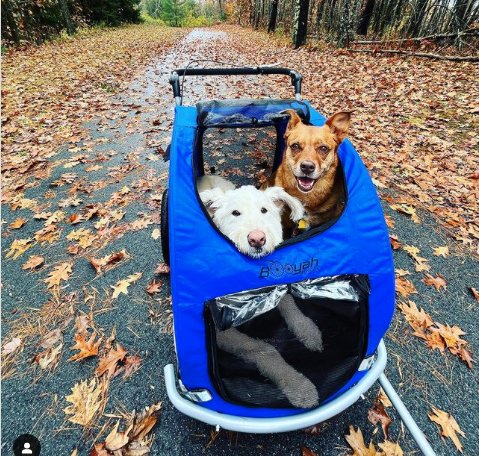
Weight distribution matters more than total capacity. Trailers with rear-positioned wheels prevent tipping when your dog shifts weight forward. Booyah models use rear-weighted wheel tracks that keep the center of gravity low, eliminating wheelie risk.
Trailer Size |
Weight Capacity |
Interior Dimensions (L x W x H) |
Best For |
|---|---|---|---|
Medium |
40 lbs |
26" x 18" x 18" |
Dogs under 40 lbs or two smaller dogs |
Large |
88 lbs |
32" x 24" x 21" |
Single dogs 50-88 lbs |
Extra Large |
110 lbs |
36" x 24" x 22" |
Large breeds 80-110 lbs or two 50 lb dogs |
Always measure interior dimensions before purchasing. A dog that can't sit up or turn around will resist entering, making rides stressful.
Dog Bike Trailer Safety Features That Matter
Key safety features include a safety harness (after proper acclimation), a hand brake for control on hills, and a 3-layer sunroof that protects from UV and weather without causing overheating or claustrophobia.
Suspension systems absorb road vibrations, benefiting senior dogs or those with joint issues. Pneumatic tires provide better shock absorption than solid wheels, but require monthly pressure checks at 35-40 PSI to prevent underinflation.
A bright orange safety flag and reflective trim increase visibility to vehicles, especially in low-light conditions. Mount the flag on a flexible pole to avoid transmitting vibrations to the trailer.
A quick-release hitch that swings out allows conversion from trailer to stroller mode in seconds.
Pet-Specific Safety: Acclimation and Behavioral Resistance
Dogs don't naturally accept trailers. Reduce anxiety with mesh windows on multiple sides, adequate ventilation, and a low entry point that doesn't require jumping.
Acclimate your dog indoors first: place the trailer with the door open, reward entry with treats, then gradually close the door for longer intervals over 3-5 days. Only attempt short 5-minute rides on flat, quiet paths once your dog enters calmly.
Red flags include excessive panting, continuous whining, or repeated escape attempts, signs the trailer is too small or poorly ventilated. Stop and reassess if these occur.
Hitch Failure Prevention and Inspection
Inspect the hitch before every ride: verify the quick-release lever is fully locked, the hitch pin and safety clip are in place, and the swivel moves freely without grinding.
Rinse the hitch mechanism with fresh water after beach or winter rides to prevent seizing.
How to Choose a Bike Trailer for Your Dog: Selection Criteria
Choosing the right bike trailer for your dog starts with three non-negotiable questions: What's your dog's actual weight and dimensions? How often will you use it? What surfaces will you ride on?
Weight Capacity and Interior Dimensions
Measure your dog from nose to tail base and shoulder width, then compare to trailer interior dimensions. Add at least 4-6 inches of extra length for comfort and shifting room.
Suspension and Ride Quality
Shock-absorbing suspension maintains consistent performance better than spring-based systems. Test by pushing down on the empty trailer; it should compress smoothly and return to center without bouncing.
Booyah Extra Large Pet Dog Stroller →
Bike Compatibility and Hitch Mechanism
Check your bike's rear axle diameter before ordering; most modern bikes use standard quick-release or thru-axle designs.
For e-bikes, some require a separate e-bike hitch.
Multi-Use Functionality: Stroller, Jogger, and Trailer in One
A multi-use thule alternative for pet trailers converts between stroller, jogger, and bike trailer modes in seconds. This flexibility eliminates the need for three separate pieces of equipment. A fully-equipped combo weighs 42-46 pounds versus 35-40 for a dedicated trailer, the extra 5-10 pounds buys three modes of use.
Adjustable handlebars (37-42 inches) accommodate different users and prevent awkward pushing angles.
Long-Term Durability and Maintenance
Aluminum frames resist rust better than steel and are lighter without sacrificing strength.
Pneumatic tires deliver better ride quality than solid tires but require monthly pressure checks. Underinflated tires wear faster and increase rolling resistance.
Spare Parts Availability and Sourcing Timeline
Before purchasing, verify the manufacturer stocks replacement components: wheels, brake pads, hitch pins, suspension shocks, and fabric panels. Confirm shipping times and whether components are standard or proprietary.
Maintenance Schedule and Cost Projections
Here's a realistic maintenance schedule for a trailer used 2-3 times per week:
Monthly: Check tire pressure and inspect hitch connection. Every 6 months: Lubricate hitch swivel ($3-$5) and inspect brake pads ($12-$25 if replacement needed). Annually: Replace brake pads if needed ($12-$25) and inspect frame for cracks. Every 2 years: Replace wheels if needed ($90-$170) and inspect fabric panels.
Total 5-year maintenance cost: $300-$600 for a trailer used regularly.
Storage and Off-Season Care
Pricing Breakdown and Value Comparison
The Booyah Extra Large Pet Dog Stroller and Bicycle Trailer with Suspension starts at $315.00 and includes the bike hitch, stroller kit with adjustable handlebar, and safety flag. No hidden fees, no required accessories (though e-bikes do require a separate e-bike hitch purchased separately).
Model |
Price |
Weight Capacity |
Interior Dimensions |
Best For |
|---|---|---|---|---|
Booyah Medium |
$260 |
40 lbs |
26" x 18" x 18" |
Small to medium dogs |
Booyah Large |
$305 |
88 lbs |
32" x 24" x 21" |
Large dogs, active owners |
Booyah Extra Large |
$315 |
110 lbs |
36" x 24" x 22" |
Extra-large breeds, two dogs |
Frequently Asked Questions
What makes a thule alternative for pet trailers worth considering?
A quality thule alternative for pet trailers offers comparable safety features, suspension systems, and durability at a lower price point. Many alternatives include the same critical features like rear axle attachment, low center of gravity design, and weather-resistant canopy without the premium brand markup. The key is ensuring the alternative meets your specific needs for dog size, bike compatibility, and intended use.
What are the most important dog bike trailer safety features?
Essential dog bike trailer safety features include a safety harness or tether to keep your dog secured inside, reflective elements for visibility, a stable rear axle attachment with proper weight distribution, and a braking system for control. A low center of gravity design is critical to prevent the trailer from tipping during turns. Look for trailers with quick-release wheels for added stability.
How do I choose a bike trailer for my dog if I have a large or extra-large breed?
When choosing a bike trailer for your dog, measure your pet's length, width, and height, then compare against the trailer's interior dimensions. For large dogs (70+ lbs), you'll need a trailer rated for at least 88-110 lbs with interior space of at least 32-36 inches long and 24 inches wide. Check the suspension system to ensure it absorbs vibrations for joint comfort. Verify bike compatibility with your frame type, and confirm the hitch mechanism is secure. Test the weight distribution to ensure stable towing.
Is suspension really necessary in a pet bike trailer?
Yes, suspension is important, especially for senior dogs or those with joint issues. A quality suspension system absorbs road vibrations and bumps, reducing stress on your dog's joints and spine. This is particularly valuable for dogs with arthritis, hip dysplasia, or post-surgery recovery. Trailers with shock-absorbing suspension provide a smoother, gentler ride that protects your pet's long-term health compared to rigid designs.
Can a bike trailer work for both my child and my dog together?
Most pet-specific bike trailers are designed for dogs only and do not safely accommodate children. If you need to transport both a child and a pet, you'll need a separate child bike trailer or a multi-purpose cargo trailer rated for both uses. Some households use one trailer for the child and a second trailer for the dog. Always check the manufacturer's weight capacity and interior dimensions to ensure safe, comfortable transport for whichever passenger you're carrying.